
TANYO cabinet hardware jig, shelf pin jig and woodworking templates
Jigs turn measuring into repeating. TANYO jigs are CNC-machined aluminium with laser-cut scales — handles, shelf pins, hinges, stair treads, rounded corners and thin strips, the same every time.
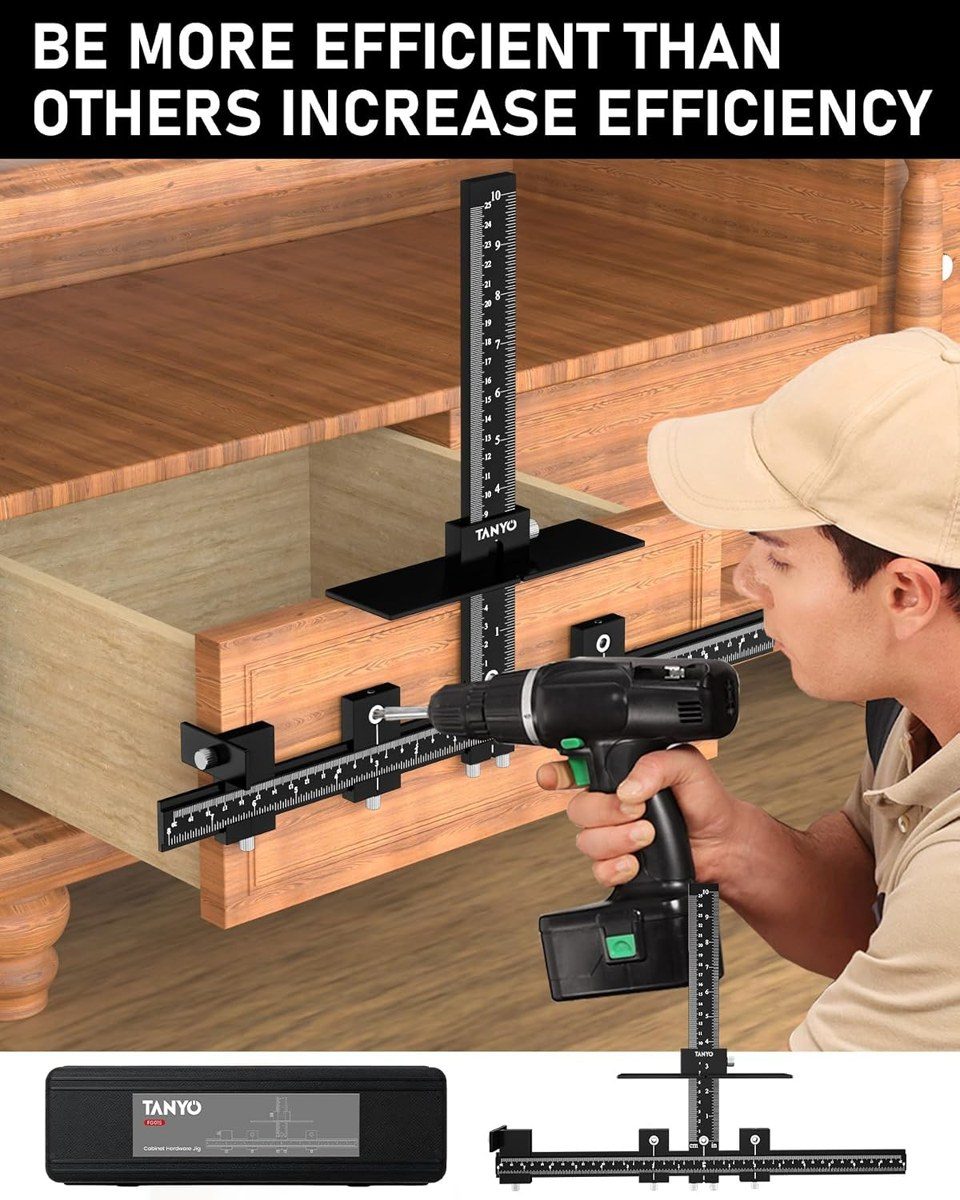
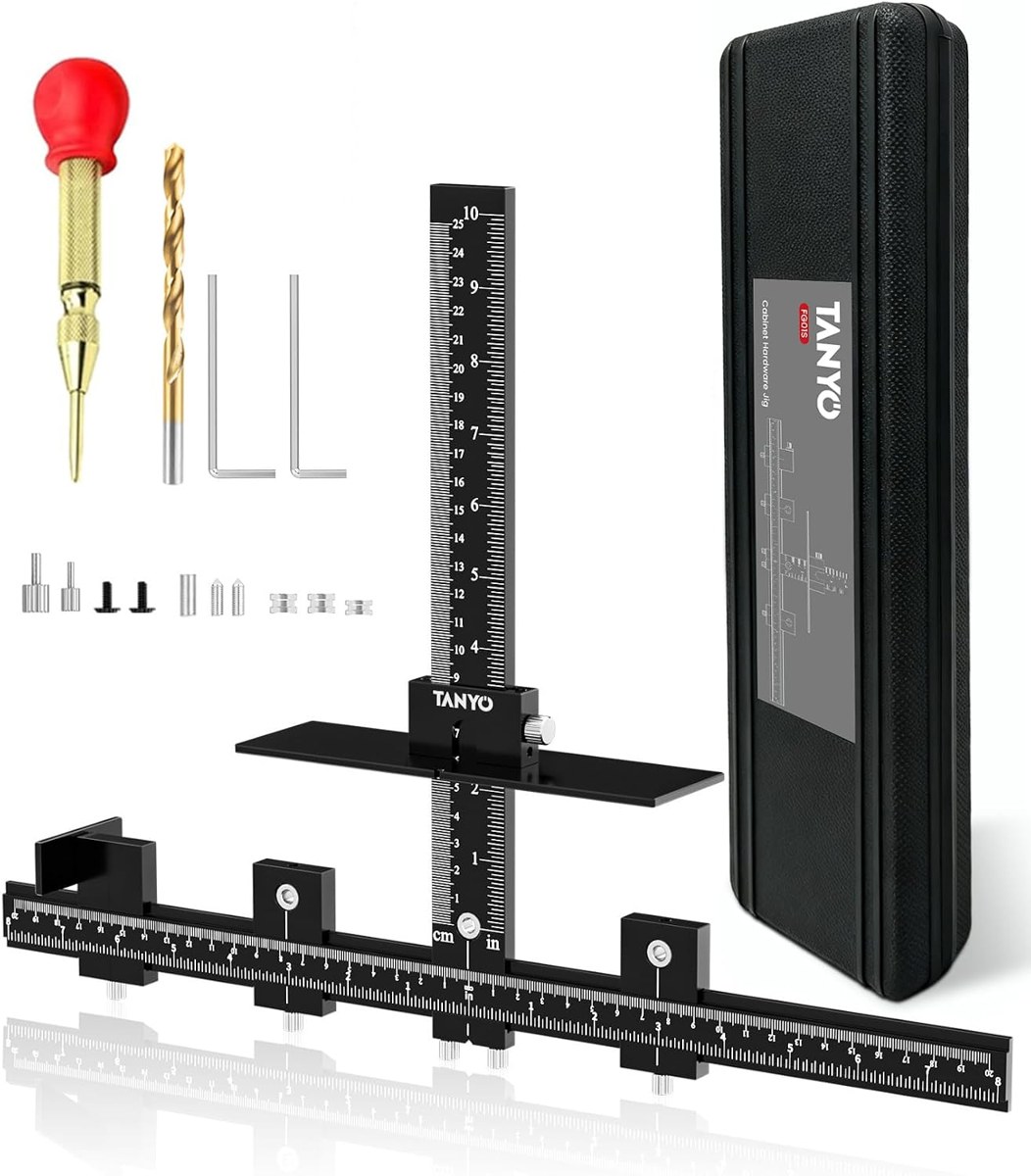
| Handles and knobs | Cabinet Hardware Jig |
|---|---|
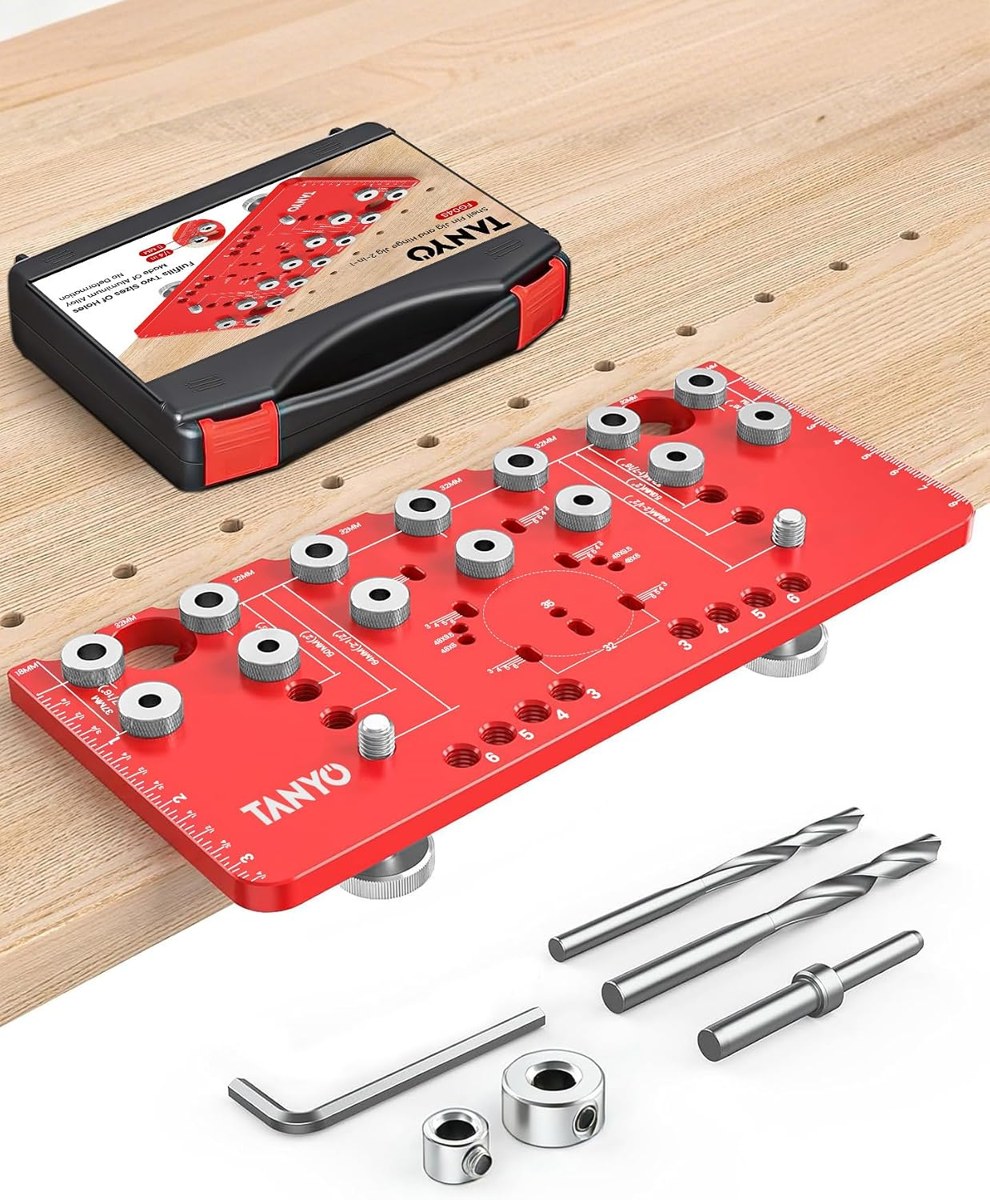
| Shelf pins and hinges | Shelf Pin Jig and Hinge Jig, 2-in-1 |
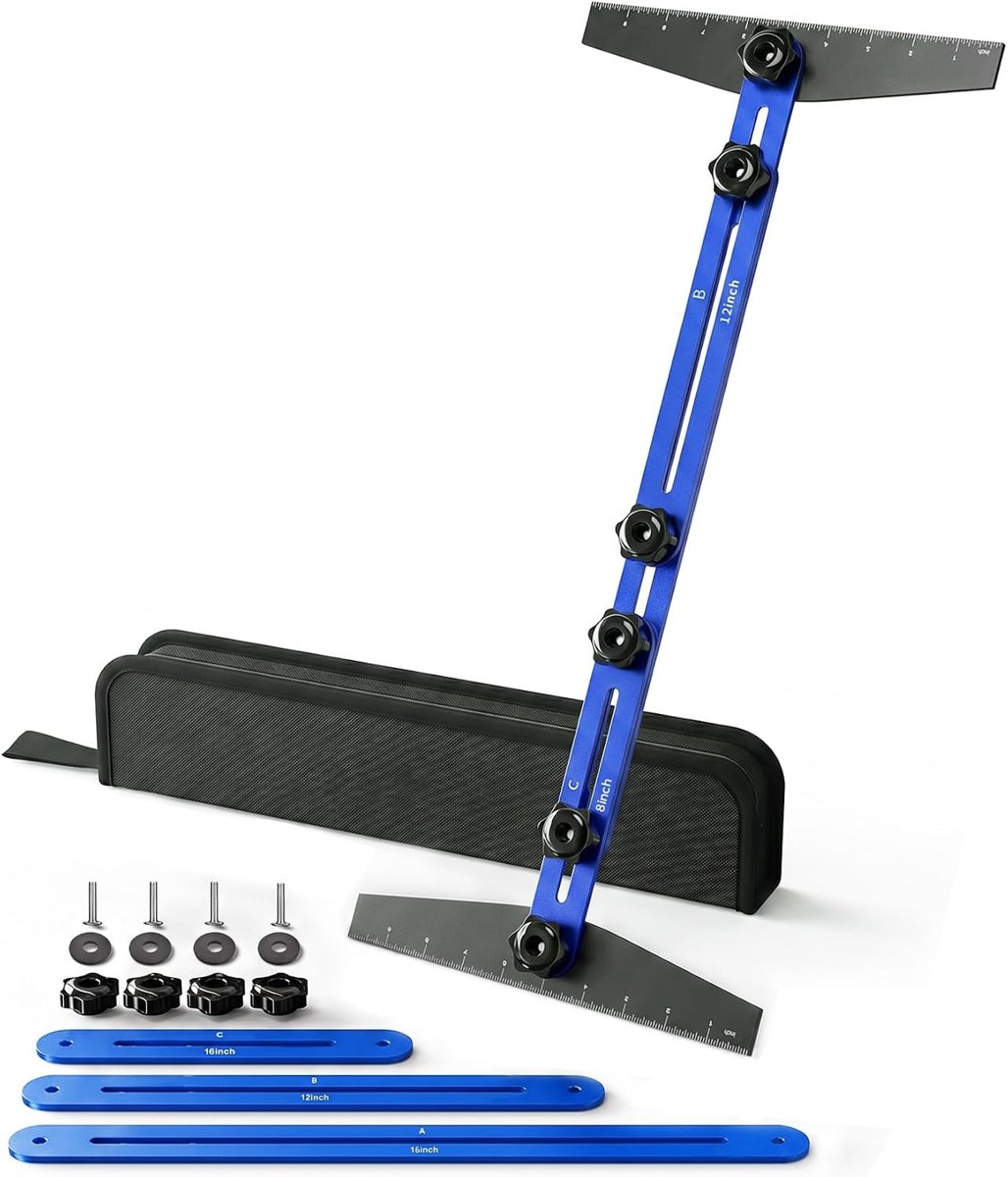
| Stair treads and sills | Stair Tread Template Tool, 8"–60" |
| Rounded corners | Router Corner Radius Templates |
| Thin strips | Thin Rip Table Saw Jig |
5 tools · 14 versions
 Best seller
 2-in-1
 18 radii
 Pro pick
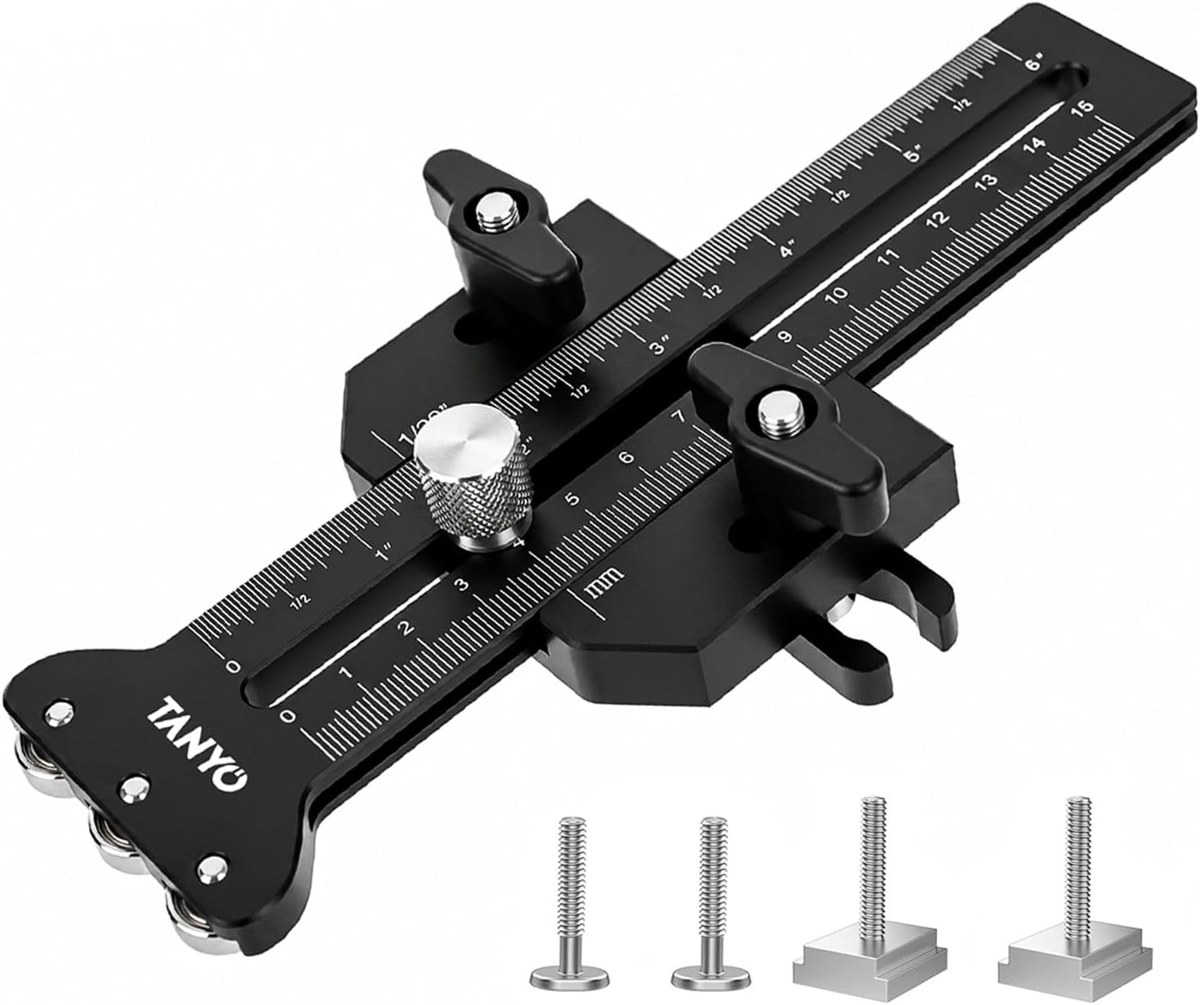 Table saw
TANYO jigs are CNC-machined aluminium with laser-cut scales. Tool questions go to [email protected]; orders, parcels and returns to the store where you bought.
How a cabinet hardware jig works
A cabinet hardware jig is a drilling template that clamps to the edge of a door or drawer front. A slider sets the hole spacing of the handle — 3 in, 96 mm, 128 mm and so on — and a stop sets the distance from the edge, so every handle in a kitchen lands in the same spot. TANYO's jig is thickened aluminium with laser-cut scales that won't rub off.
The shelf pin jig does the same for rows of shelf-pin holes: drill sleeves for 1/4 in and 5 mm bits keep the holes straight, and a second guide places 35 mm concealed hinge cups at the correct inset.
Install knobs and pulls with accurate placement
Most people buy a cabinet hardware jig for one kitchen and keep it for every project after. Without one, each pull means a tape measure, a pencil, a square and a guess about the screws; with one, the placement is set once and repeated on every cabinet door and drawer. The jig registers from the edge of the door, so the position of each handle is the same distance from the bottom corner, and the drill guide keeps the bit square to the wood so the screws line up with the hardware.
Precision matters most on long runs of cabinets, where a small error shows from across the room. The TANYO jig is designed for both single knobs and two-hole pulls, works on doors and drawer fronts of any size, and its metal drill guides keep holes accurate over years of use. It is versatile enough for small vanity installs and a full kitchen, and the aluminium body gives it durability that plastic jigs lack.
Templates for stairs, corners and thin rips
- Stair tread template: opens 8–60 in, copies both wall angles, locks the shape.
- Router corner radius templates: R10–R60 and chamfers, plus a large R100–300 set.
- Thin rip jig: rides in the miter slot so thin strips fall away from the blade.
Clamp every template before you cut, and test the first cut on scrap.
Choosing the right jig
- Handles, pulls and knobs: cabinet hardware jig.
- Adjustable shelf pin holes and 35 mm hinges: shelf pin and hinge jig.
- Stair treads, risers and shelves between walls: stair tread template.
- Rounded table and cabinet corners: router radius templates.
- Thin strips on the table saw: thin rip jig.
Questions about woodworking jigs
Does the cabinet hardware jig work on drawers and doors?
Yes. It clamps to the edge of either and sets spacing and edge distance.
Which bits fit the shelf pin jig?
1/4 in and 5 mm bits through the removable sleeves; a 35 mm Forstner bit for hinges.
Can the stair tread template do shelves?
Yes, any shelf or sill between two walls from 8 to 60 inches.